All year
Events and festivals on the coast.
Easter processions, fish festivals, the dawn concert in Ravello, Christmas markets: what happens on the coast, month by month.
- Events
- 30
- Free
- 22
- Towns
- 10
January
The monthNew Year’s Concert at Amalfi CathedralJan 1 · Amalfi · Music · free
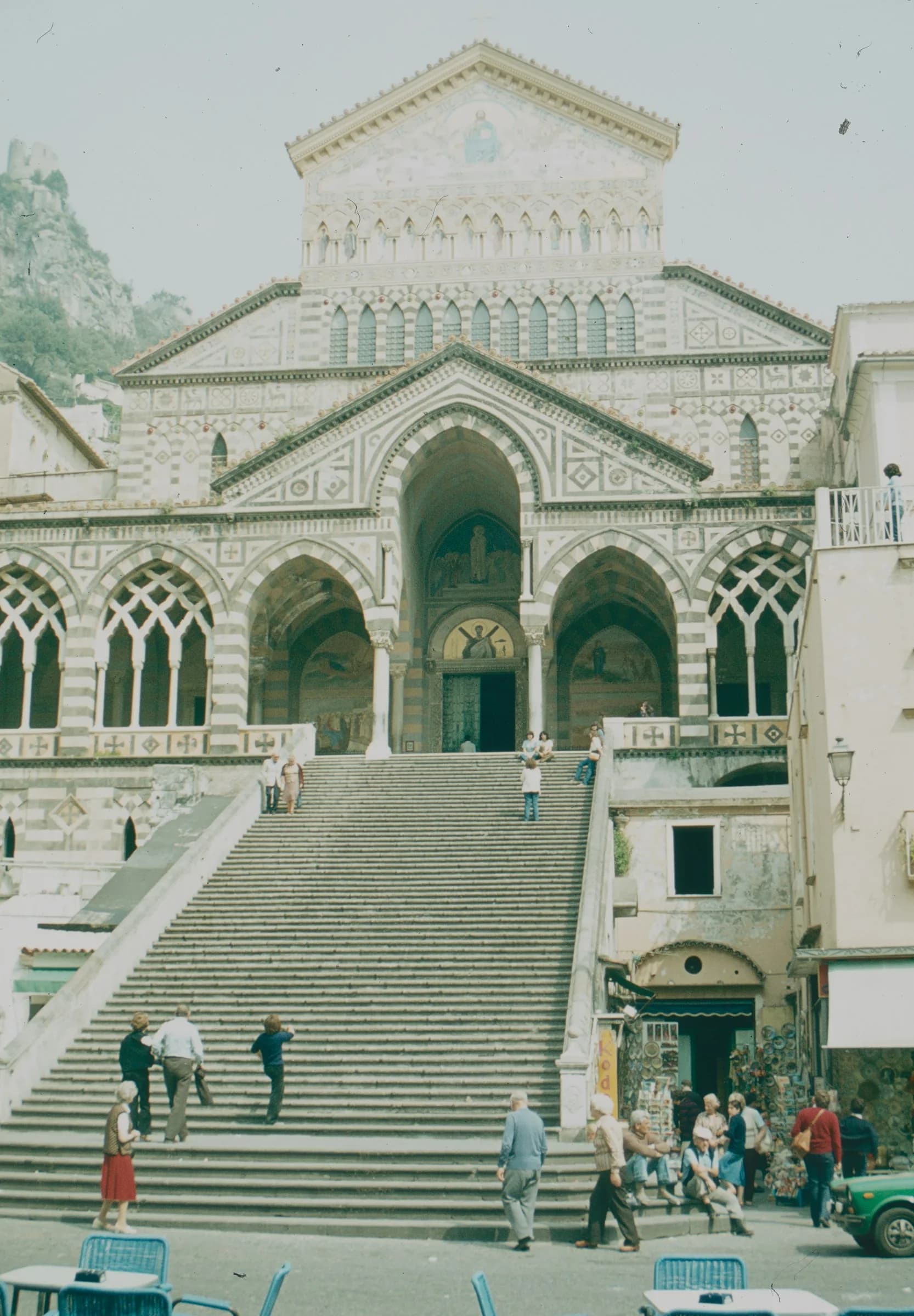
The year begins with a classical concert inside the 9th-century Cathedral of Sant’Andrea. The acoustics of the Arab-Norman nave transform chamber music into something transcendent. Local and regional orchestras perform pieces by Neapolitan and Italian composers — Scarlatti, Pergolesi, Vivaldi — as candlelight reflects off the golden mosaics. The event is free and open to all, but the cathedral fills fast. Arrive early and sit on the left side for the best sound. The concert usually starts in the late morning, followed by a passeggiata through Amalfi’s festive streets.
- Classical music in a 9th-century cathedral
- Free admission
- Post-concert passeggiata through festive Amalfi
The tip
Arrive 45 minutes early to get a seat. From the cathedral steps you can see the decorations in the piazza, even if the interior is full.
February
The monthCarnival of MaioriMid-February to early March · Maiori · Festival · free
Maiori hosts the oldest and most elaborate carnival on the Amalfi Coast, a tradition dating back centuries. Giant papier-mache floats parade along the lungomare, accompanied by marching bands, costumed dancers, and theatrical troupes performing satirical sketches about local politics and national figures. The floats are built by neighborhood teams that compete for the best design, after weeks of work in garages and warehouses. Children throw confetti, the bars spill out onto the street, and the whole town becomes an open-air party. The grand finale features a fireworks display over the sea.
- Giant papier-mache floats
- Satirical theatrical performances
- Fireworks over the sea
- Neighborhood competition
The tip
The best viewing spot is near the main piazza where the floats slow down for the judges. Wear clothes you do not mind getting covered in confetti and foam.
Carnival of MinoriMid-February to early March · Minori · Festival · free
Minori’s carnival is the family-friendly counterpart to Maiori’s larger celebration. The town’s narrow streets fill with costumed children, local bands, and smaller but beautifully crafted allegorical floats. The emphasis is on food: stands along the lungomare serve frappe (fried carnival pastry), castagnole (fried dough balls), and sanguinaccio (chocolate cream with pig’s blood — more delicious than it sounds). The parade route winds through the historic center past the Roman Villa and down to the beach. It is a joyful, intimate celebration where visitors are pulled into the dancing by strangers who become friends.
- Family-friendly atmosphere
- Traditional carnival sweets
- Parade through the historic center
- Costumed children
The tip
Try the sanguinaccio — the traditional chocolate and pig’s blood cream. It sounds alarming but it is one of the most decadent desserts in Campania. Minori’s pastry shops make the best version on the coast.
March
The monthSpring Food Markets OpeningEarly March onwards · Minori, Amalfi · Market · free
As the coast shakes off winter, the weekly food markets in Minori and Amalfi spring back to life with the season’s first harvest. Stalls overflow with Amalfi lemons the size of softballs, puntarelle (chicory shoots), wild asparagus foraged from the hillsides, fresh ricotta still warm in its basket, and the first strawberries from the Lattari Mountains. Local fishermen sell the morning catch directly from their boats at the harbor. These are not tourist markets — they are where the nonnas of the coast do their weekly shopping. Prices are fair, quality is extraordinary, and you will taste produce that never sees the inside of a supermarket.
- First Amalfi lemons of the season
- Wild-foraged asparagus and greens
- Fresh ricotta from local shepherds
- Harbor-side fish stalls
The tip
Minori’s Tuesday market is the best. Arrive by 8 AM for the freshest fish. Bring a reusable bag — the vendors respect travelers who come prepared. Ask to taste before buying; the vendors expect it.
April
The monthEaster ProcessionsHoly Week (Thu-Sun before Easter) · Amalfi, Minori, Ravello, Atrani · Religious · free
The Easter processions on the Amalfi Coast are among the most atmospheric religious events in southern Italy. On Holy Thursday and Good Friday nights, hooded penitents in white robes carry wooden statues of the Madonna and Christ through torch-lit streets, accompanied by mournful brass bands and the rhythmic thud of bare feet on ancient stone. In Amalfi, the procession descends the cathedral steps and winds through the medieval center. In Minori, it follows the waterfront. In Atrani, the tiny piazza becomes an open-air theater of grief and devotion. Ravello’s procession along the clifftop roads is lit only by torches and candles. These are living medieval traditions, not performances for tourists.
- Hooded penitents in white robes
- Torch-lit streets
- Medieval brass bands
- Ravello’s clifftop procession
The tip
The Good Friday evening procession in Atrani is the most intimate and moving. Stand near the church of San Salvatore de' Birecto in the piazza. Dress respectfully and keep flash photography off — this is a sacred event, not a show.
Lemon Blossom SeasonLate April to May · Maiori, Minori, Amalfi, Ravello · Nature · free
When the Amalfi Coast’s famous lemon trees bloom, the entire hillside releases a perfume so intense you can smell it from the road. The terraced groves between Maiori, Minori, and Ravello turn white with star-shaped flowers, and the air becomes almost narcotic with citrus fragrance. The Sentiero dei Limoni (Lemon Path) between Maiori and Minori passes through the heart of the groves — a 45-minute walk through tunnels of lemon trees heavy with both fruit and flowers. Local farmers offer tastings of limoncello, lemon marmalade, and lemon-infused honey. The sfusato amalfitano lemon, with its thick aromatic skin and sweet flesh, is unique to this coast and protected by IGP status.
- Sentiero dei Limoni walk through blooming groves
- Sfusato amalfitano lemon tastings
- Limoncello and lemon honey
- Fragrant hillside terraces
The tip
Walk the Sentiero dei Limoni from Minori to Maiori (downhill is easier). Stop at any farm with an 'Assaggi' sign for free lemon tastings. Early morning is best when the fragrance is strongest and the light is soft.
May
The monthLemon Harvest SeasonMay through September · Maiori, Minori, Amalfi, Ravello, Cetara · Food · ticketed
The main harvest of the sfusato amalfitano — the Amalfi Coast’s signature lemon — begins in May and transforms the terraced hillsides into a flurry of activity. Workers carry enormous baskets on their shoulders down ancient stone steps from groves that cling to near-vertical slopes. Many farms open for guided visits where you can pick lemons, learn about the centuries-old cultivation methods (the pergola system of trellises), and taste fresh limoncello made on-site. Restaurants switch to peak-lemon menus: lemon risotto, delizia al limone (lemon cream cake), lemon granita, and pasta al limone. This is the coast at its most fragrant and productive.
- Farm visits with lemon picking
- Fresh limoncello tastings
- Lemon-based restaurant menus
- Ancient pergola cultivation system
Tickets · Farm visits typically 15-25 EUR per person including tasting. Some farms free if you buy products.
The tip
Book a farm tour in Ravello or Minori for the most authentic experience. The farms on the Sentiero dei Limoni between Minori and Maiori are family-run and less commercial than the ones advertised in Positano.
Villa Rufolo Gardens Peak BloomMay to June · Ravello · Nature · ticketed
The gardens of Villa Rufolo in Ravello reach their peak in May, when the terraced grounds explode with roses, wisteria, bougainvillea, and exotic plants collected over centuries. Richard Wagner visited in 1880 and wrote that he had found Klingsor’s magic garden from Parsifal; the Ravello Festival grew from that visit. The Moorish cloister, the 13th-century tower, and the famous Belvedere terrace 350 meters above the sea create a setting that merges medieval architecture with subtropical botany. In late May, the light is golden and the crowds are a fraction of July’s chaos. One of the most beautiful garden experiences in Italy.
- Wagner’s 'Garden of Klingsor' inspiration
- Belvedere terrace 350m above the sea
- Roses, wisteria, and bougainvillea
- 13th-century Moorish architecture
Tickets · Villa Rufolo admission 10 EUR (adults), 8 EUR (reduced). Open daily 9:00-sunset.
The tip
Visit at opening (9 AM) or after 17:00 to avoid the cruise ship groups. The Belvedere terrace at sunset with the coast below is one of the great views of southern Italy.
June
The monthRavello FestivalLate June through early October · Ravello · Music · ticketed
The Ravello Festival is one of Italy’s most prestigious music events, running from late June through early October with concerts in the open-air Belvedere of Villa Rufolo — a stage suspended 350 meters above the Amalfi Coast. Founded in 1953 to honor Wagner’s connection to Ravello, the program spans symphonic orchestras, chamber music, jazz, and contemporary works. The Concerto all’Alba (Dawn Concert) in August is the best known: the audience watches the sun rise over the sea while an orchestra plays. Performers have included the London Philharmonic, Riccardo Muti, and Ennio Morricone. The setting alone — stars above, sea below, music in between — is worth the ticket.
- Open-air stage 350m above the sea
- Dawn Concert in August
- International orchestras and soloists
- Wagner heritage since 1953
Tickets · Tickets 25-130 EUR depending on performance and seat. Book at ravellofestival.com well in advance — popular concerts sell out.
The tip
The Dawn Concert (Concerto all’Alba) in August sells out months in advance — book as soon as tickets drop. For regular concerts, the unreserved upper terrace seats (cheaper) actually have the best views of the stage and the sea together.
Festa di Sant’AndreaJun 27 · Amalfi · Religious · free
The Feast of Sant’Andrea is Amalfi’s most important celebration — a day-long homage to the patron saint whose relics rest in the cathedral crypt. The morning features a solemn mass and procession of the saint’s silver bust through the town. But the spectacle is the evening: fishermen race up the cathedral’s 62 steps carrying the heavy silver statue, while crowds cheer from the piazza below. Fireworks explode over the harbor, brass bands fill the streets, and food stalls sell seafood fritters, zeppole, and beer until late. The 'liquefaction of the manna' — a mysterious liquid that appears on the saint’s relics — is checked by the archbishop. A second celebration occurs on November 30.
- Fishermen racing up the cathedral steps
- Silver bust procession
- Fireworks over the harbor
- Liquefaction of the manna miracle
The tip
Position yourself in Piazza Duomo by 19:00 for the best view of the fishermen’s run up the steps. The fireworks are best watched from the harbor pier. Book restaurants well in advance — the town doubles in population for this day.
Regatta of the Maritime RepublicsFirst Sunday of June (Amalfi hosts every 4 years) · Amalfi · Sport · free
A historic rowing competition between the four medieval Maritime Republics of Italy: Amalfi, Genoa, Pisa, and Venice. Each city takes a turn hosting, so Amalfi sees it roughly every four years — but when it does, the entire town transforms. Eight-oar boats in the colors of each republic race along the coast, after a historical parade with hundreds of people in medieval dress. Amalfi’s blue-and-gold boat, named after Duke Roger, races under the roar of the hometown crowd. The harbor becomes an arena, and the pride of the ancient Amalfitani fills the air. Check the rotation year before planning around it.
- Four-republic rowing race
- Medieval costume parade with hundreds of participants
- Amalfi’s blue-and-gold boat
- Every-4-year hosting rotation
The tip
The harbor wall is the best free viewing spot — arrive by 14:00 to claim a position. The historical parade through town (from around 16:00) is worth as much as the race. Check if it is Amalfi’s host year at regaterepubblichemarinare.it.
July
The monthMarMeeting — World Cliff DivingMid-July · Furore · Sport · free
For the MarMeeting, the tiny Fiordo di Furore becomes a diving venue. Athletes dive from the 30-meter-high road bridge into the narrow gorge below, executing acrobatic twists and somersaults that seem to freeze in the Mediterranean air before they plunge into the emerald water. Spectators line the cliffs, the bridge railing, and the tiny beach at the bottom. The event draws international competitors and has become one of the most photogenic sporting events in southern Italy. The setting is unmatched — the ancient stone bridge, the vertical gorge walls, the turquoise water — creating a natural amphitheater that no stadium could replicate.
- 30m cliff dives from ancient road bridge
- International athletes
- Natural gorge amphitheater
- Free spectating from the cliffs
The tip
Get to the fjord by 9 AM to secure a spot on the beach below — once it fills, you watch from the bridge or the cliff path above. Bring binoculars if watching from the top. The preliminary rounds in the morning are quieter; the finals in the afternoon draw the biggest crowds.
Sagra del Tonno e delle AliciMid-to-late July · Cetara · Food · free
Cetara’s tuna and anchovy festival is one of the most authentic food events on the Amalfi Coast — a celebration of the fishing traditions that have defined this village for over a thousand years. Stalls along the harbor serve freshly grilled tuna steaks, fried anchovies, spaghetti with colatura di alici (the ancient fermented anchovy sauce), and alici marinate (marinated raw anchovies in lemon). Local fishermen demonstrate traditional netting techniques and explain the art of colatura production. Live music, folk dancing, and copious wine flow through the streets. This is not a tourist event with printed menus — it is a village feeding its guests the way it feeds itself.
- Freshly grilled tuna from local boats
- Colatura di alici tasting
- Traditional fishing demonstrations
- Live folk music and dancing
The tip
The spaghetti alla colatura stand near the harbor is the one to find — it is the dish that defines Cetara. Buy a bottle of colatura directly from the fishermen’s cooperative (much cheaper than shops). Arrive hungry.
Luminarie di San DomenicoLate July through mid-August · Praiano · Festival · free
Every summer, the village of Praiano transforms into a cathedral of light. Thousands of hand-crafted wooden frames covered in colored lightbulbs are erected along the streets, staircases, and terraces of the village, creating an illuminated labyrinth that turns the hillside into a glowing tapestry visible from the sea. The tradition honors San Domenico, Praiano’s patron saint, and has grown over the decades into one of the best-known events on the coast. At night you walk through the lit streets, with the dark sea below and the lights reflected in the water. Live bands, food stalls, and fireworks accompany the displays.
- Thousands of handcrafted light installations
- Village transformed into illuminated labyrinth
- Visible from the sea
- Live music and fireworks finale
The tip
Visit after 21:00 when the lights are fully on and the temperature drops. Walk the entire village from Marina di Praia up to the main church — each section has different designs. If you can arrange an evening boat, the view from offshore is the best one.
Festa di Sant’AnnaJul 26 · Minori · Religious · free
The Feast of Sant’Anna on July 26 is Minori’s most beloved celebration. The saint, patron of mothers and grandmothers, is honored with a procession of her statue from the Basilica of Santa Trofimena through the streets and along the lungomare to the beach. In the evening there are fireworks, launched from boats anchored offshore, over the whole bay. The fireworks in Minori are well known: families from across the coast drive in to watch. Food stalls along the beach serve grilled sausages, fried pizza, and local wine. The atmosphere is pure southern Italian summer: loud, warm, and deeply communal.
- Offshore fireworks display over the bay
- Procession of Sant’Anna’s statue
- Beach food stalls
- Families from across the coast gather
The tip
Watch the fireworks from Minori beach at sea level for maximum impact — the explosions reflect off the water. Arrive by 20:00 to get a good spot. Alternatively, watch from the road above between Minori and Ravello for a panoramic view of the entire bay lighting up.
Wagner Concerts at Villa RufoloJuly weekends · Ravello · Music · ticketed
Throughout July, the Ravello Festival dedicates a series of concerts specifically to Wagner and the Romantic composers he inspired, performed on the Belvedere stage at Villa Rufolo where Wagner himself stood in 1880. These are not ordinary recitals — the open-air stage extends over the edge of the terrace, so musicians perform with the darkening Mediterranean as their backdrop and the lights of the coast twinkling below. The program typically includes excerpts from Parsifal, Tristan und Isolde, and the Ring Cycle, alongside works by Liszt, Brahms, and Bruckner. As darkness falls and the music swells, the boundary between art and landscape dissolves completely.
- Wagner on the stage he inspired
- Open-air Belvedere terrace performance
- Mediterranean sunset backdrop
- Ring Cycle and Parsifal excerpts
Tickets · Tickets 30-100 EUR. Book at ravellofestival.com — Wagner nights are the most popular.
The tip
Bring a light jacket — the terrace gets breezy after sunset. The pre-concert aperitivo at Palazzo Avino hotel nearby has a view that rivals the venue itself.
August
The monthFerragosto FireworksAug 15 · Maiori, Amalfi, Positano, Minori, Praiano · Festival · free
Ferragosto — August 15, the Feast of the Assumption — is Italy’s biggest summer holiday, and the Amalfi Coast celebrates with synchronized fireworks displays that turn the entire coastline into a spectacle of light. Maiori, Amalfi, and Positano each launch massive displays from barges offshore, and from the right vantage point you can see multiple shows at once reflecting off the dark sea. The beaches stay packed until well past midnight, restaurants run special menus, and the atmosphere crackles with the energy of an entire nation on vacation. Traffic is apocalyptic: leave your car parked and take the ferry or walk between towns. This is the coast at its most alive and most chaotic.
- Multiple simultaneous fireworks shows
- Visible from points between towns
- Beaches alive until midnight
- Peak summer atmosphere
The tip
The best viewing spot is the road between Amalfi and Atrani — you can see both towns' fireworks simultaneously. Alternatively, book a boat trip to watch all the displays from the water. Do NOT try to drive on Aug 15 — take the ferry or walk.
Peak Anchovy SeasonAugust through October · Cetara · Food · free
August marks the peak of anchovy season in Cetara, when the village’s small fishing fleet brings in the largest catches and the ancient colatura production kicks into high gear. The anchovies are layered in chestnut-wood barrels with sea salt and left to ferment for up to three years — the amber liquid that drips through is colatura di alici, a direct descendant of the Roman garum that once made this coast wealthy. During peak season, some producers open their cellars for tastings and demonstrations. The restaurants overflow with anchovy preparations: fried, marinated, baked in parmigiana, or simply laid on bruschetta with a drizzle of oil. This is food with a thousand-year pedigree.
- Colatura di alici cellar tastings
- Fresh anchovy preparations at every restaurant
- Ancient Roman garum tradition
- Working fishing harbor in action
The tip
Visit Nettuno or Delfino colatura producers for a cellar tour — call ahead. The best anchovy dish in Cetara is the simplest: alici marinate al limone (raw anchovies in lemon juice) at Acquapazza restaurant.
Assumption Processions at SeaAug 14-15 · Positano, Amalfi, Maiori · Religious · free
On the eve of Ferragosto, several Amalfi Coast towns carry statues of the Madonna to the sea in evening processions. In Positano, the Byzantine Black Madonna from the Church of Santa Maria Assunta is carried through the streets to the beach, where fishermen wade into the water bearing her image as flares illuminate the bay. In Amalfi, a flotilla of decorated boats escorts the Madonna’s statue across the harbor. These maritime processions connect directly to centuries of seafaring tradition — fishermen asking for protection, families honoring the dead at sea, a community binding itself to the water that has always defined it.
- Madonna carried into the sea
- Decorated boat flotillas
- Flares illuminating the bay
- Ancient seafaring devotion
The tip
Positano’s beach procession on the evening of Aug 14 is the most photogenic. Watch from the pier or rent a small boat to see it from the water. The flares turn the bay red and the scene is genuinely overwhelming.
September
The monthGusta MinoriEarly September (usually first week) · Minori · Food · free
Gusta Minori is the Amalfi Coast’s main food festival: several days celebrating of the culinary traditions that earned Minori the title 'City of Taste.' The lungomare becomes an open-air kitchen with dozens of stalls serving the coast’s signature dishes: ndunderi (ancient gnocchi predating Roman times), scialatielli ai frutti di mare, melanzane alla cioccolata (eggplant with chocolate, better than it sounds), and the pastries of Sal De Riso. Cooking demonstrations, wine tastings, and historical reenactments of ancient recipes fill the program. The festival celebrates not just taste but memory — how food connects generations on this coast. Hundreds of thousands attend across the event days.
- Ndunderi — ancient gnocchi predating Rome
- Sal De Riso pastry demonstrations
- Melanzane alla cioccolata
- Cooking classes and wine tastings
The tip
Go straight to the ndunderi stand — they sell out early every night. The scialatielli are best from the stands run by actual restaurant kitchens (look for the longer lines). Arrive before 20:00 on weekend evenings or the crowds become unmanageable.
Historical Regatta of AmalfiFirst or second Sunday of September · Amalfi · Cultural · free
Distinct from the rotating Maritime Republics regatta, Amalfi’s own Historical Regatta is an annual event that recreates the glory of the medieval maritime republic through a rowing race between the town’s four historic rioni (quarters). Each rione fields a crew in traditional colors and races along the harbor, cheered on by residents who have supported the same quarter for generations. A lavish historical parade precedes the race, with hundreds of costumed participants reenacting scenes from Amalfi’s golden age — diplomats, merchants, sailors, and the Doge himself processing through the streets to the harbor. The atmosphere is fiercely competitive and deeply local.
- Four-quarter rowing race
- Medieval costume parade
- Doge reenactment
- Fierce inter-neighborhood rivalry
The tip
The harbor wall near the arsenal museum gives the best view of both the start and finish. The costume parade through Via Lorenzo d’Amalfi (around 16:00) is worth watching even if you skip the race itself.
Grape Harvest SeasonLate September through October · Ravello, Furore, Maiori, Cetara · Food · ticketed
The grape harvest on the Amalfi Coast is unlike any other wine region — vines grow on near-vertical terraces sometimes accessible only by monorail or donkey, and grapes are hand-picked and carried down in baskets on workers' shoulders. The indigenous grape varieties — Falanghina, Biancolella, Pepella, Tintore, Piedirosso — produce distinctive coastal wines that taste of salt, sun, and volcanic mineral. September brings harvest activity to vineyards in Furore (Costa d’Amalfi DOC), Ravello, and the hills above Maiori. Small producers open for tastings and cellar visits. The white wines of this coast, especially from Furore and Ravello, are among Italy’s most underrated bottles.
- Vertical terrace vineyards
- Indigenous grape varieties
- Cellar tastings at small producers
- Costa d’Amalfi DOC wines
Tickets · Winery visits typically 15-30 EUR per person with tasting. Book directly with Marisa Cuomo (Furore), Ettore Sammarco (Ravello), or Reale (Tramonti).
The tip
Contact Cantine Marisa Cuomo in Furore for the most dramatic vineyard visit in Italy — the vines literally hang over the sea. Their best-known wine is the Fiorduva, a white. Book at least a week ahead in September.
October
The monthChestnut FestivalsWeekends throughout October · Ravello · Food · free
As autumn arrives on the Amalfi Coast, the hill towns above Ravello — Scala, Tramonti, and the mountain hamlets of the Lattari range — celebrate the chestnut harvest with weekend sagre (food festivals). Roasted chestnuts fill iron braziers on every corner, chestnut flour becomes the base for cakes and bread, and castagnaccio (chestnut cake with rosemary and pine nuts) appears on every menu. The forests above the coast turn gold and red, and the hiking goes through country that few tourists see. These are mountain festivals, not coastal ones — the atmosphere is heartier, the food is richer, and the wine flows from local cellars. A reminder that the Amalfi Coast is not just sea and sun.
- Roasted chestnuts on every corner
- Castagnaccio and chestnut flour specialties
- Autumn foliage hiking
- Mountain village atmosphere
The tip
The Sagra della Castagna in Scala (above Ravello) is the most authentic — take the bus from Ravello. Combine it with a hike through the Valle delle Ferriere nature reserve. October weekends are perfect: warm enough to swim in the morning, cool enough for mountain festivals in the afternoon.
Last Swimming DaysThrough late October · Positano, Amalfi, Maiori, Minori, Cetara, Vietri · Nature · free
In October the sea is still warm enough to swim. The sea temperature stays above 20 degrees Celsius through mid-October — warmer than the English Channel in August — while the beaches are nearly empty and the light turns golden and soft. The summer crowds have gone, restaurant prices drop, and the locals reclaim their coastline. Beach clubs start closing mid-month, but the free sections stay accessible. The combination of warm water, empty beaches, autumn light, and affordable everything makes October the connoisseur’s month on the Amalfi Coast. You might need a light sweater for the walk home, but the swimming is glorious.
- Sea temperature above 20C through mid-month
- Empty beaches
- Golden autumn light
- Lower prices everywhere
The tip
Cetara and Maiori hold warmth longest thanks to their south-facing orientation. Bring a towel and a book — October beaches are for lingering, not rushing. The water is clearest now because the summer boat traffic has stopped.
November
The monthNew Olive Oil SeasonNovember through December · Cetara, Maiori, Ravello · Food · ticketed
November brings the olive harvest to the Amalfi Coast’s terraced groves, and with it the year’s most anticipated culinary event: olio nuovo — freshly pressed olive oil, bright green, peppery, and explosively flavorful. The frantoi (olive presses) in Cetara, Maiori, Tramonti, and the hills above Ravello fire up their machinery and begin producing oil that tastes nothing like what sits in supermarket bottles. Locals line up at their favorite frantoio with empty bottles, and restaurants celebrate with bruschetta drizzled in the new oil alongside beans, soups, and grilled bread. Some frantoi open for visits where you can watch the pressing and taste oil minutes after production — an experience that redefines what olive oil means.
- Freshly pressed olio nuovo tastings
- Frantoio (olive press) visits
- Bright green, peppery new-harvest oil
- Bruschetta con olio nuovo at restaurants
Tickets · Frantoio visits free or 10-15 EUR with tasting. Oil purchase typically 12-18 EUR per liter for quality extra virgin.
The tip
Ask any local restaurant in November for 'olio nuovo' — they will serve it with pride. The best frantoi for visits are in the hills above Cetara and in Tramonti. Buy directly from the producer: the quality-to-price ratio is unbeatable compared to bottled tourist oil.
Vino Novello SeasonReleased third Thursday of November · Furore, Ravello, Maiori · Food · ticketed
On the third Thursday of November, Italy releases its vino novello — the young, fruity wine from the current year’s harvest, similar in concept to French Beaujolais Nouveau. On the Amalfi Coast, the small wineries of Furore, Ravello, and Tramonti celebrate with tastings and small festivals. The novello is light, slightly fizzy, and meant to be drunk immediately — a wine of celebration, not contemplation. Pair it with roasted chestnuts, fresh walnuts, and the first sopressata of the season. Local enotecas host release events with music and food. It is a perfect excuse to visit the coast in its quietest, most atmospheric season, when mist hangs in the valleys and the village lights glow warm against the grey sea.
- Young wine release celebrations
- Pairing with chestnuts and sopressata
- Enoteca tasting events
- Quiet autumn coast atmosphere
Tickets · Enoteca tastings typically 10-20 EUR for 3-5 wines with food pairing.
The tip
Cantine Marisa Cuomo in Furore usually hosts a novello event — check their website. The combination of new wine + new olive oil in November is one of the coast’s greatest gastronomic pleasures and almost no tourists know about it.
December
The monthLife-Size Nativity of MinoriLate December through January 6 · Minori · Cultural · free
Minori creates one of the most impressive life-size nativity scenes on the entire Amalfi Coast. The historic center transforms into a living Bethlehem: costumed actors portray the Holy Family, shepherds, wise men, and villagers in scenes set among actual ancient buildings and the ruins of the Roman Villa. Artisan workshops demonstrate period crafts — bread-making, weaving, woodworking — while the smell of roasting chestnuts and mulled wine fills the narrow streets. The route winds through atmospheric alleys lit by torches and candles, passing stalls selling handmade Christmas decorations and traditional sweets. It is theatrical, devotional, and deeply atmospheric — the kind of Christmas experience that has almost disappeared from modern Europe.
- Life-size nativity in ancient streets
- Costumed actors and artisan workshops
- Roman Villa ruins as backdrop
- Torch-lit atmospheric route
The tip
Visit on a weekday evening for fewer crowds. The route starts near the basilica and winds through the old quarter — follow the torches. Wear warm layers; the streets channel cold wind from the mountains. End at the bar on the lungomare with a hot cioccolata.
Christmas ConcertsThroughout December · Amalfi, Ravello · Music · ticketed
Throughout December, the churches and concert halls of Amalfi and Ravello host a series of classical Christmas concerts that draw on centuries of Neapolitan musical tradition. The Cathedral of Sant’Andrea in Amalfi offers choral performances of Renaissance and Baroque sacred music — Palestrina, Pergolesi, and Neapolitan Christmas pastorali — under the golden mosaics of the nave. In Ravello, the Auditorium Oscar Niemeyer, designed by the Brazilian architect, hosts chamber and orchestral concerts under its white modernist shell. Some events are free; others require tickets. The combination of sacred music, ancient architecture, and the quiet winter coast creates an intimacy that summer concerts cannot match.
- Sacred music in Amalfi Cathedral
- Oscar Niemeyer Auditorium in Ravello
- Renaissance and Baroque repertoire
- Intimate winter atmosphere
Tickets · Cathedral concerts often free. Niemeyer Auditorium concerts 15-50 EUR. Check comune di Amalfi and Ravello Festival websites.
The tip
The Amalfi Cathedral concerts on Christmas Eve are packed: arrive an hour early. Ravello’s Niemeyer Auditorium is worth visiting for the architecture alone even if you skip the concert.
Christmas MarketsEarly December through January 6 · Amalfi, Ravello, Maiori, Minori, Vietri · Market · free
Christmas markets dot the Amalfi Coast from early December through Epiphany, each town adding its own character. Amalfi’s market fills Piazza Duomo with stalls selling hand-painted ceramics, limoncello, torrone (nougat), and artisan presepe (nativity) figures carved from wood and terracotta. Vietri’s market is about its ceramics: Christmas ornaments, tiles and tableware painted in the town’s bright colors. Ravello’s more refined market occupies the piazza near Villa Rufolo with curated local products. Maiori’s lungomare market is the most family-oriented, with rides, sweets, and Santa Claus. The atmosphere is gentle, unhurried, and free from the commercial frenzy of northern European Christmas markets.
- Handmade presepe figures in Amalfi
- Vietri ceramic Christmas ornaments
- Ravello curated artisan products
- Maiori family-friendly market with rides
The tip
Vietri’s market is the best for unique gifts — the ceramic Christmas tree ornaments (5-15 EUR each) are beautiful, handmade, and available nowhere else. Buy directly from the artisan stalls, not the shops, for better prices and the chance to request custom colors.
New Year’s Eve on the CoastDec 31 · Amalfi, Positano, Maiori, Ravello · Festival · free
Ringing in the new year on the Amalfi Coast is an experience that combines Italian festive energy with one of the world’s most beautiful backdrops. Amalfi’s Piazza Duomo hosts a free outdoor concert and countdown, with fireworks launched over the harbor at midnight. Positano’s Spiaggia Grande fills with revelers watching fireworks reflect off the pastel village above. Ravello offers a more elegant affair — gala dinners at historic hotels followed by champagne on terraces overlooking the coast. Maiori’s lungomare becomes an open-air party with live music, street food and fireworks. The tradition of wearing red underwear for luck applies here too. Restaurants serve the classic cenone di Capodanno — a multi-course feast of seafood that starts at 21:00 and does not end until the fireworks.
- Midnight fireworks over the harbor
- Free outdoor concerts in piazza
- Cenone di Capodanno seafood feast
- Ravello gala hotel dinners
Tickets · Outdoor events free. Restaurant cenone dinners 80-200 EUR per person. Ravello hotel galas 150-400 EUR. Book well in advance.
The tip
Book your cenone restaurant by early December — the good ones sell out fast. If you want the piazza experience in Amalfi, eat dinner early and walk to the Duomo by 22:30. Wear layers and comfortable shoes — you will be standing and walking for hours. The red underwear is not optional.
Where